A Christmas Carol

Marley was dead: to begin with. There is no doubt whatever about that. Yes, the influential Jamaican Reggae star had shuffled off this mortal coil in May 1981 so it couldn’t be him, and anyway, this bloke was white. Who was he?

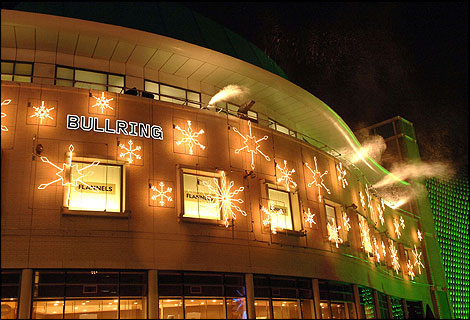
It is the night before Christmas and I am in the ‘Bullring’ Birmingham’s famous shopping centre and snow is falling. I last saw the ‘Old’ Bullring in about 1979. It was, let’s face it not only an eyesore, but an earsore, armsore and legsore it was so bad. Not so today. It is very tidy (in fact bang tidy) neat and very busy.

I am still pondering this transformation in the gents toilets, whilst drying my hands. I am using one of these new-fangled blown air hand driers. Similar to the Dyson airblade, it looks like an open letterbox in the wall. It is pretty pathetic. A vision passed before my eyes of the facia of this thing being removed to reveal two wheezing old men blowing through it from behind. This nightmarish thought was soon banished by an awareness that someone was standing behind me…

I turned and looked. Who was he? Not Bob Marley as we’ve summised, (too white, too alive) Joe Cocker? (too young) Justin Bieber? (too old)

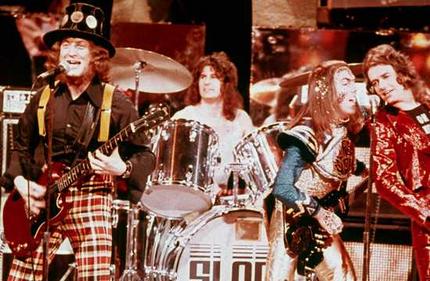
‘Alright’ he said in a gravelly West Midlands accent while he moved to use the hand dryer. Of course! It was only Noddy Holder! The owner of the best pair of lungs this side of the Mississippi Delta and singer of the best Christmas song ever. The band was Slade and the record, the evergreen ‘Merry Christmas Everybody’ a hit for the band first time round Christmas 1973.

If you didn’t know, and although you probably really couldn’t give a shit, I’m going to tell you anyway; the story is that this seasonal ditty which has etched its way into our national consciousness, along with Turkey, Santa Claus and Dickens’ ‘Christmas Carol’ was in fact recorded over a blistering hot week in New York, late summer of that year. Apparently, Lennon (that’s John, Liverpool, musician not Aaron, Spurs, winger) was in the next studio recording ‘Mind Games’ at the time.

The song was a hotch-potch of snippets that Noddy and Jim Lee had lying around. They were given the final touch, it is reported when (I love this …) Noddy “After an evening out drinking, worked through the night at his mother’s house in Walsall to write the lyrics, which he completed in one draft.” You see? a genuine slice of British Popular Culture crafted in a Walsall two-up two- down after a night on the ale. Bowie, meantime, earnestly doing his Willliam Burroughs’ ‘cut-ups’ must have been wondering where he went wrong.

The problem is what to say? What about a ‘cool’ approach? Drop in a ‘blokey’ comment which might initiate a conversation.

That’s it! I figured.

Of all the things I could have said or asked him – such as

‘What was it really like to work with Dave Hill?’

‘Why the Mirror Hat, Nod? and how did you keep it on?’

Failing that, ‘Ere Noddy, you know when Don Powell lost his memory, were there ever things you told him that hadn’t happened, just for a laugh?’

No, of all the things … I quip.

‘These hand driers are about as much use as a chocolate teapot’

He looked at me and snorted a snort which said … said what? I’m still analysing it.….and made his way out.

Of course what I should have done was wish him a ‘Merry Christmas’, for he knows how to keep Christmas well, if any man alive possessed the knowledge. May that be truly said of us, and all of us! And so, as Tiny Tim and Dave Hill observed, God Bless Us, Every One!

Have a Happy Christmas

With apologies to Charles Dickens. ‘A Christmas Carol’ a contrived piece of seasonal nonsense from ‘Sitting Comfortably?’

Here’s wishing all our readers a peaceful, happy, healthy 2015.

©Andy Daly

Easy Come Easy Go: A Christmas Story

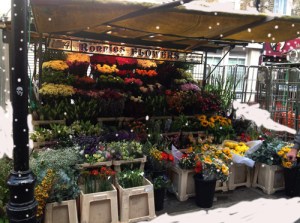
Well it comes along about 11 bells the night before Christmas Eve in nineteen eighty something or other. I am sitting warming my feet in the old Blue Posts pub on Berwick Street Soho. It is cozy and festive-looking with shiny decorations and real christmas tree, courtesy of Ronnies, the flower stall. Outside it is freezing and the white stuff is falling all day, such that patrons entering have to defrost momentarily before they are able to dust off the snow they bring in with them.

My feet (especially the left) take a considerable time to thaw out, as to the fact that in an attempt to do just that (thaw them out) I leave them rest in their Dr. Martens boots a little over-long on the fire surround. Now if Dr. Martens boots have an Achilles heel (so to speak) it is the vulcanised rubber sole. Acid, Alkali, Oil, Fat and Petrol-resistant they may be, but not heat. So the net result of this little exercise is a hole in the sole of my left boot. Ordinarily, not much of a problem apart from the ‘pht, pht, pht …’ sound you make as you walk along. But in the snow; a major handicap as it enters through the hole and lodges there in the form of an icy lozenge, making sure my left foot is thoroughly chilled all day.

The Blue Posts

The Blue Posts

In there with me, enjoying a few scoops and hoping for a cozy little after hours lock-in are Mad Mick the cabbie, Ronnie Flowers and a tall guy with a stripy face, result of being shivved-up in a club over on Brewer Street. Dinner and Dance, as he is known to one and all (except the arresting officer, with who he is on such good terms that he answers only to his real name of Lance) does a brisk trade in everything, especially when it falls off the back of a lorry. In fact the last occasion he does time it is because he is in the back of a lorry trying to get 20G’s worth of jeans to fall off it.

Ronnie's Flower Stall

Ronnie’s Flower Stall

The door opens, bringing in a flurry of snow. Now with the mercury trying to bust its way out of the bottom of the thermometer, Ken wanders in with his regular casual attire of short sleeved shirt with button down collar, cashmere sweater, neatly pressed jeans and trainers. His only consession to the weather is a red Santa Claus hat with a flashing neon ball. In all the years I know Ken, I never hear him complain about being cold and he certainly never wears anything such as a coat or jacket.

Ken rubs his hands theatrically. It is fourteen hours since he cracks open his first drink of the day. Now It is time to let his hair down.

“A bottle of shampoo, and whatever these are having” At which he carelessly waves his hand in the direction of the rest of the punters.

It seems Ken has been in Topo Gigio’s eatery and has stopped in at the club on D’Arblay Street for half a dozen ‘Winter Warmers” And not only that, but who is he with, but The Great White Chief who runs out of Gillespie Road, which back in the day is in the shadow of Highbury. Well known by all as a top geezer and all round good guy, even if he does have a taste for the old grog.

And who does the Great White chief have his meal interrupted by as the waiter brings the phone to the table at Topo Gigio’s?

Only Terrible Tom. Now Terrible Tom, everyone is in agreement, punches way above his weight. He likes to think that he runs with the Big Boys and is a top guy around town, when in fact he is nothing but a halfwit who takes too many chances, and does not run himself a tight ship. Like tonight. Terrible Tom has the Roebuck in Victoria, big and noisy. The kind of bar I will cross the street to avoid.

Now it seems Tom, aside from his pub management duties has been showing a growing interest in all manner of extra curricular activities such as fraud and embezelment to name but two. In fact he has been ‘buying in’ whereby he takes it on himself to go direct to a ‘wholesaler’ (The Great White Chief) who is willing to buy him large quantities of grog. And not only that, but deliver under the cover of night. As the Roebuck is a tied house, naturally the brewery, if they ever find out take a very dim view of this, especially as, like today it involves 24 x 11 gallon barrelsof Fosters, which is a lot of spud in any language. So when the brewery call and inform him to be prepared for an 8:30am stock check on Christmas Eve, Terrible Tom starts to get terribly agitated. In fact as the day goes on he gets more and more panicky as he is unable to reach The Great White Chief such that by nine, when he finally tracks him down to Topo Gigio’s, he is naught but a quivering wreck.

Of course at such a time of the day the Great White Chief is having trouble remembering his own name, but despite this, he is able to remember what a pain in the bliff Terrible Tom is. But being a good sort the Great White Chief agrees to drop him his gear and goes about enlisting the help of his assistants, yours truly included. However, he plans to make terrible Tom sweat as much as poss.

Now getting hold of such a large amount of liquor at such short notice is no mean feat. In fact it means a trip in the transit to an old engine shed behind Kings Cross, owned by the Finnertys.

The Finnertys are a well known criminal family from Islington. Now don’t get me wrong, I am as much a believer in family values as the next man but in the Finnerty’s case the pursuit of same can get a bit out of hand.

I daresay the best-known example of this is their Finsbury Square shoot-out with rival gang the Adams family. It seems like both sides seriously underestimate each other’s resolve because after five minutes they have run out of slugs for their sawn-offs. Each repairs to cafes at opposite sides of the square for shelter and to re-arm with squeezy bottles of Tomato Ketchup.

The scene of carnage shocks even the hardest of the Gendarmes, when they finally arrive until it is realised that the dozens of bloody victims are uninjured, the only attention required being nothing more than the phone number of a reputable dry cleaners..

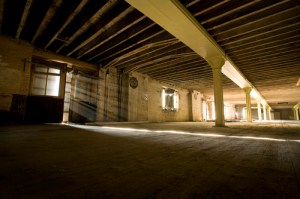
That said, there are any number of places I would rather be on a snowy night two days before Christmas than an old engine shed behind Kings Cross with Matty Finnerty, his map looking very creased indeed as, suited and booted, his black 1972 Mercedes Benz 280 SE 3.5 parked alongside, he supervises the operation.

The Finnerty's shed behind Kings Cross

The Finnerty’s shed behind Kings Cross

Van loaded, the financial transaction complete, The Great White Chief and the crew scuttle off down to Victoria and without incident (unless you include driving through Victoria Bus Station, and being stopped by The Bizzies on Waterloo Bridge – something to do with driving without lights on and tax, insurance, log book and suchlike, I believe. I don’t know as I never drive the transit I never take much notice of these things.) In fact Terrible Tom is so pleased that he still has a job and a livelihood that the whole gang are treated to a few warm somethings to stave off the wintry chill.

It is gone 2:00 am when we return to noisy Blue Posts. Reason being Ken makes such a song and dance about The Great White Chief’s successful mission as he lets him back into the bar. A quick look at my Tintin watch confirms there is no way I’m going to get to the flat tonight. In fact, I am due to open up the off licence with Ken in approx six and a half hours. It’s just as well I’ve got my clothes with me in my bag, for tomorrow at noon I am to make the long Journey up to the frozen North to wish the Old Timers and family ‘Joyeux Noel’. As the brandies get passed around on account of the cold and snow and whatnot, there is another rap at the door.

We figure it must be one of The Great White Chief’s crew, so we open up. In a mini snow storm who should make an entrance with four of his gorillas but Matty Finnerty and moreover they are all tooled up with sawn-offs, and I’m willing to bet shivs as well, though I never get round to asking.

“Good Evening gentlemen” Says Matty all friendly like as he looks around the room at Ken, Dinner And Dance, The Great White Chief, Ronnie, mad Mick and me. “Don’t mind if I do” he says eyeing the brandy. Ken pours another glass.

Now I remember hearing somewhere that the Finnertys begin to take an interest in insurance particularly in the form of extortion, protection rackets and so forth; and it turns out Matty has been collecting insurance premiums all day.

“It seems” he says “You do some pretty good business with Terrible Tom after you leave us. I know this because we follow you all night …” He pauses and casts a withering look at The Great White Chief. “Which reminds me, I must have a word with you about your driving sometme. Now, as we all know Christmas is a time for giving … and you’re going to give me Terrible Tom’s one and a half Gs. In the bag if you please!”

With that, Matty indicates a plastic carrier bag. The Great White Chief, not being a man of violence, sees that the odds are stacked against him and does as he says, but with such a look of pain as I only ever see carved on the faces of the people in churches and suchlike.

“Good! Now with the business out of the way let’s enjoy a bit of Christmas spirit. Merry Christmas one and all!” Says Matty Finnerty.

Matty slams his sawn-off and bag onto the bar, right next to my head, causing me to leap about 3 feet off my stool. Someone puts ‘Fairytale of New York’ on the juke box and Matty Finnerty and his boys begin to wail. Outside, the snow comes down like five pound notes falling from the sky.

Well, at some point I doze off, and the next thing know I am chewing a bar towel, waking from a dream that I am eating the biggest Christmas dinner ever. I look around. Most of last night’s ghosts are gone. Only Dinner and Dance and Ronnie Flowers still snooze either side of a cold fire. I grab my bag and hot foot it out into the market to get some bacon and eggs and a couple of gallons of tea, in the Berwick St. Snack Bar (Phone Orders Taken) before opening up with Ken. Who is philosophical about the night’s events.

“Easy come easy go” is the only comment he makes. I am not sure The Great White Chief sees it like that, but decide to let sleeping dogs carry on snoozing.

Well, before I know it, it is time to bid farewell, Happy Christmas, Feliz Año Nuevo and make my way through the snow to Euston Station for the phenomenon that is the Christmas Eve West Coast Line service all stations to Glasgow. This has to be seen to be believed. The carriages are awash with beer and wrapping paper, their occupants dancing and singing traditonal songs like ‘Merry Christmas Everybody’ ‘I wish It Could be Christmas Every day’ and ‘Bohemian Rhapsody’. Everyone is full of Christmas cheer.

Indeed, when I alight, I am so full of Christmas cheer, I can barely walk in a straight line.

Finally and wearily I make my way up the path home. It has stopped snowing now. The sky is clear and frosty with a bright moon that sets the drifts of snow a’ twinkling. Once inside, I quietly make a nightcap as my parents, brothers, and their wives, nephews and nieces have been asleep awhile.

I leave my plastic bag of clothes in the kitchen before going tp to join the rest in the Land Of Nod.

I am awoken by such a commotion; even for a Christmas morning. There seems to be more shouts and expressions of joy than from my mother than I remember for a long time. Bleary-eyed, I make my way downstairs, stepping over various nephews and neices as required and enter the front room.

“Why if it isn’t the best son anyone ever has, you make our dreams come true, now we can retire to that lovely little cottage by the orchard! …”

Retire? Who? Cottage? Orchard? This is the first I hear of it.

Of course, I am thinking she already overdoes the Christmas sherry, and any more and she will be out for the count the rest of the day. Until I see her holding my plastic bag, which she empties onto the table. And what do you expect falls out? Not the shirts, socks and pants I leave last night to go in the wash, but bundles of carefully tied £50s and £20s. I am astonished. Then I remember the night before last in the Blue Posts, how Matty Finnerty drops his bag and gun on the bar, next to me. It seems he picks up the wrong bag. Matty gets my laundry while my Mum gets, at my quick estimation something like one hundred and thirty Gs. (Less The Great White Chief’s one and a half Gs which I intend to siphon off and return to him asap)

After that, I keep a low profile for a little while, and anyway, I am far too busy, what with arranging a move to the cottage by the orchard and one thing and another to visit the smoke.

Which is probably just as well.

Happy Christmas!

In memory of two larger than life characters Ken Whitehead and Arthur Mullen.

© Andy Daly 2012

Brain Salad Surgery

Well, if I ever needed an illustration of what my life would be like without my Deep Brain Stimulation (DBS) set up, I had one yesterday.

And it wasn’t pretty.

But let’s start at the beginning.

Last week I got a call from The Functional Neurosurgery Department at The National Hospital For Neurology And Neurosurgery, Queen Square, London. They were calling to see if I’d be interested in helping them out with some tests. They are doing some research into the unwanted side effects of DBS, notably twitching or similar muscle movement in the lips, and the hand.

Of course I said yes.

It means a lot to help out, if only a small way, the team who have been so helpful to me.

A brief reminder about DBS. It involves implanting 2 electrodes deep into the brain, which are cabled to a battery and pulse generator implanted in the chest cavity. When properly set up, the pulse generator sends current to the electrodes  and the stimulation of the pathways in the Subthalamic Nucleus it causes are able in successful cases, to ease Parkinsonian symptoms.

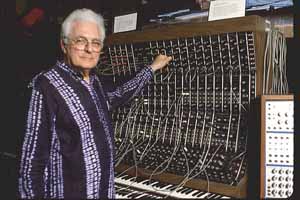
Yesterday’s task, as I understand it was for the team to make some recordings of muscle activity with my DBS settings turned off and, then using one lead only (ie. one side of the brain) increase the amplitude in increments of one volt at a time. To capure this I had numerous electrodes stuck on my face my hands. Now, I’m no expert but it seemed these were connected to what looked like a 1970’s Moog synthesizer: a huge piece of equipment, favoured by Prog Rockers like Keith Emerson and Rick Wakeman. Which is not as daffy as it sounds if you think about it, the synthesizer’s job being to take white noise and shape it by altering its wave patterns and other parameters to create electrical impulses which can be converted to sound.

Robert Moog with Modular Synthesizer. It would fit on a credit card now.

Robert Moog with Modular Synthesizer. It would fit on a credit card now.

The equipment yesterday was doing pretty much the same thing, kind of in reverse picking up electrical impulses coming from my brain which have been shaped by the DBS settings and converting them to wave patterns (and presumably sound as well if required) which can be viewed on a computer, and recorded along with physiological changes in the patient, The brain, ably assisted by the implanted Impulse Generator under my collarbone, playing the role of synthesizer

We got going after a few teething problems which including getting the electrodes to give a clear read out. You’ll be pleased to hear that trying to solve this problem included turning the equipment off then turning it on again! Which was a strangely comforting thing to see.

Equipment for recording brain activity. You see what I mean?

Equipment for recording brain activity. You see what I mean?

As the tests progressed, I fairly soon went into an ‘off’ state characterised by lack of movement, and ridgidity . It is so difficult to describe what this is like. I am unable to move – even to shuffle back into the seat so I am comfortable. I can’t hold a cup of water, it has to be ‘fed’ to me. I am as helpless as a newborn baby. It doesn’t hurt as such, but it is extremely uncomfortable. This is what I would be like without the DBS. I would need constant care, would lose any Independence I enjoy, plus I would be having to take ever larger amounts of anti-Parkinson’s drugs. Drugs which have some scary side effects, which include hallucinations, impulse control disorders and dyskenesias (uncontrollable movements)

After about an hour and a half, the team had got some successful recordings, with twitching coming in around 6 – 7 volts. My settings were restored and I slowly come back to life, able to talk and smile again. Such sessions always leave me exhausted, but a measure of how far I’ve come in the 3 years since the op. Is that I made way back home on the rush hour tube, rather than take the cab the hospital offered me.

It really is remarkable, the difference DBS has made , and it is a technique which is constantly evolving. It is being used in the treatment of Cerebral Palsy, Tourette’s Syndrome, Depression and Migrane nowfor instance. For my money it represents the way forward in treating Parkinson’s in a cost effective way.
Sadly it has no effect on the tendency to compose or listen to Prog Rock.


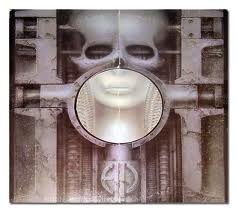
The great H R Giger's sleeve design for ELP's 'Brain Salad Surgery'

The great H R Giger’s sleeve design for ELP’s ‘Brain Salad Surgery’

© Andy Daly 2014

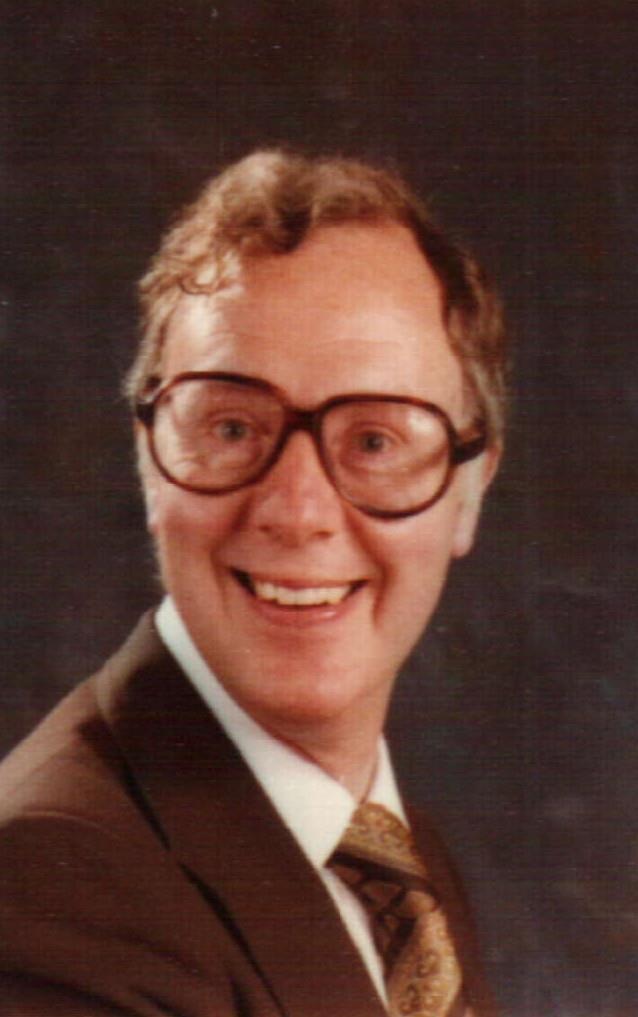
Peter Hill

It is a matter of great regret that I never said a proper ‘Thank You’ to Peter Hill.

It was he, bless his large, round glasses who was responsible for the singlemost brilliant piece of teaching of my whole school career.
A bit of background: This happened in Rochdale, Lancashire.

Ah! Rochdale.If you’ve never been there, it’s a bit like … how can I describe it? … Imagine the Cotswolds and an artist’s watercolour pallette, full of greens in all their subtleties, an embarrassment of hues and tones: fresh, fragrant and soothing. Alongside it, the artist’s page and a peaceful, landscape, lovingly depicted but which is steadily succumbing to the leaking black which is seeping into it, courtesy of the artist’s son. Who, fancying a crack at a bit of painting of his own is happily grinding the brush into the disintegrating picture. He then paints his own fingers, the lamp black mixing nicely with the remnants of a peanut butter sandwich, which then also becomes incorporated into the pastoral scene… That’s what Rochdale is like.

Or at least it was in the ‘70s when I lived there and when Peter Hill, teacher and actor, cut a dash (as still does I am lead to believe) impeccably dressed as always, through the cobblestoned streets of nearby Whitworth.

I knew a bit about Peter Hill before I went to St. Wilfred’s Catholic Middle School where he taught. There were tales that went around about this mad English teacher who wildly over-pronounced certain vowels and consonants and had a ready willingness to threaten and use corporal punishment. My Dad (also a teacher, but not at the same school) had a few stories about him too, but advised me to tread with caution. He thought Mr. Hill an experienced and wily campaigner who could be a hard taskmaster and yet inspired great loyalty.

‘Trilly’ as he was affectionately known (Mr. Hill – Mister Hill – Mister ‘ill – Mistrill – Trilly: See?) was a regular cast member of the Whitworth Amateur and Musical Dramatic Society and a brilliant comic actor (something which he brought into his teaching incidentally) I still have very clear memories of him singing “I am the very model of a modern major general” and, it may have been the same production, an occasion when his false moustache and beard began to slip. With a series of matchless ad-libs he used it to great comic effect.

I adored him though, of course I didn’t tell a soul in school, particularly once I had reached St. Wilfred’s myself, and where, during my first year, for no apparent reason (I think I just got off on the ‘wrong foot’ with the place) I was a complete arse. He taught me Latin that year, but I just messed about. I didn’t give him a chance. I came bottom in the exam.

The following year, he taught me English. I was in one of his lessons, doodling away, as I often did, on the inside cover of my exercise book at a cartoon figure. I didn’t realise as I struggled with the hands of this wretched creature I was drawing that he was standing right behind me: ‘So THIS is what we do in our English lessons is it?’ He made me come out to the front. I was mortified. Ashen – faced, which you couldn’t see because I was blushing so much, I watched, eyes prickling with the hot tears welling up, but which I wouldn’t allow to fall, as he tore a page from my book, wrote something on it, folded it in half, and told me to go with it to the Library. I assumed I’d be met there by one of the senior staff to be given a serious punishment…I mean…getting sent out of a lesson.

‘Can I help you?’ The Librarian was a nun with a profile like an eagle. I dithered and looked around

‘Yes?…’ She was impatient. I thrust the piece of paper at her. She read it then told me to sit down.

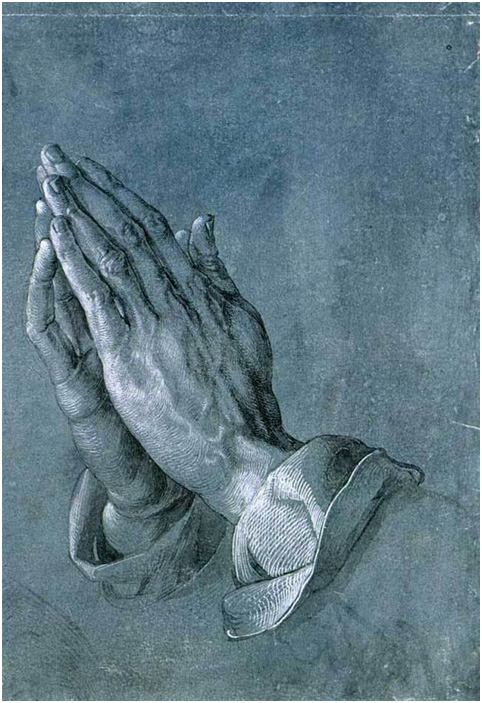
After a few minutes, she returned with a book, set it on the table before me, opened it and laid the note alongside. This is what I saw…

Albrecht Durer ‘Praying Hands’ 1508

Underneath his written instruction to the Librarian it said:

“If you are going to draw hands in my lesson, you might at least get them right. Stay here and draw these until you know them back to front. Don’t move till I come to collect you.”

I never did get them right. But I’ve had a blast trying. So Peter, please accept my belated apologies.

…… Oh, and Thank You.

Postscript

Some four years after this was written I got a message which said that a relative of Mr Hill had stumbled across ‘Sitting Comfortably’ and had shown him this piece.

He was very keen to contact me and so I passed on my phone number. Sure enough about a week later I got a call one saturday morning. It was Peter Hill. We had a lovely conversation in which we remembered old times.

So I did get to thank him after all.

Peter Hill: Actor and Teacher

Peter Hill: Actor and Teacher 29.09.30 – 07.08.15 Requiescat In Pace

 © Andy Daly 2010

Our Our Day Out

In 1976 I saw a TV play about school trip. It was about a group of kids from Liverpool, Mrs Kay’s Progress Class (for ‘if you’re backward like’) and their visit to Conway Castle. It featured a young Alun Armstrong who played the authoritarian Deputy Head Mr. Briggs. Every school has one: or at least they used to. They have probably been replaced by a computer and CCTV behind the bike sheds now. Anyway, Briggsy lets his hair down during the second half of the trip and they all finish up having a good time

The denouement has Briggsy that evening back at school, alone, exposing Mrs Kay’s roll of film thus destroying all the snaps of the trip.

The play was ‘Our Day Out’ by Willy Russell.

Fast forward two years. It is summer 1978.

The mini buses draw up and park one behind the other on the field. The doors smash open, and a seemingly un-ending stream of children emerge and begin to run like crazy, in no particular direction, shouting, screaming, pushing and shoving.

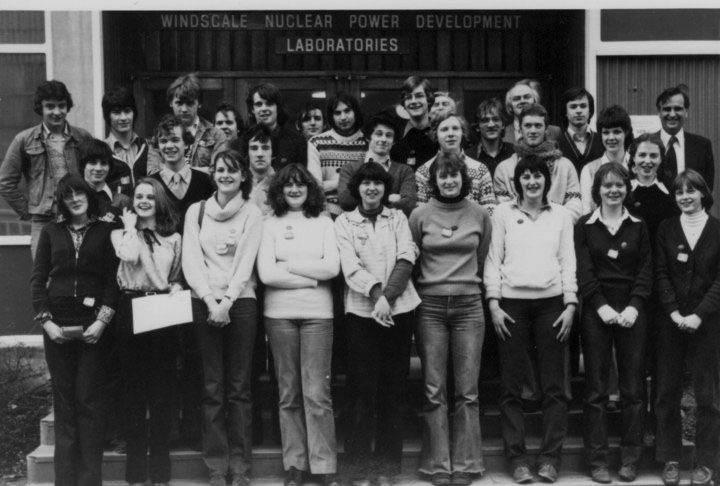
These were the ‘Guests’ we had been waiting for. ‘We’ being Sixth Form students at Wyndham School in Egremont, West Cumbria. And the ‘Guests’ being year Six from St. Georges Primary School, Hulme in Manchester.

The staff from the two schools shook hands and introduced themselves, then made their way up to a marquee for a cup of tea. Meanwhile, we were left to greet the kids and keep them from going down to the farm, or up the Head, where there are steep drops to the sea.

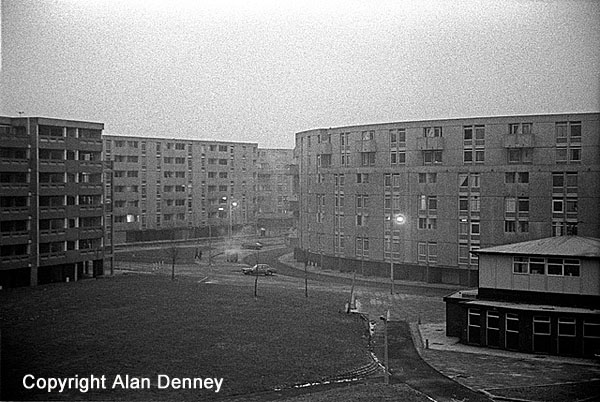
Hulme. Crescent Estate 1978

Hulme. Crescent Estate 1978

Two comments by children that afternoon dispelled any doubt, should any have remained that they were deprived and marginalised young people. One was ‘What’s that?’ as the girl in question pointed at a cow, which was slowly lolloping down to the farm for milking. The other was the confusion caused by tide. ‘Where’s the water gone? It was there about an hour ago.’ So many of them had not seen the sea before.

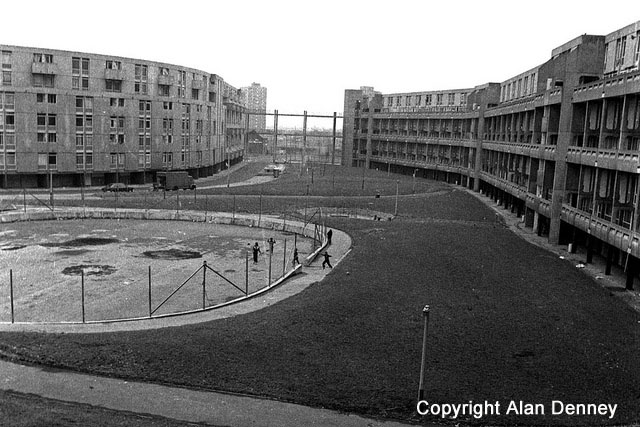
Hulme. Crescent Estate

Hulme. Crescent Estate

I had better explain. Wyndham, the school in which I did my Sixth Form was a co-ed comprehensive on the edge of the West Lakes. An enlightened establishment, among other things it put up with us removing all the furniture out of the Head of Sixth Form’s office and turning it into a pretty convincing opium smoking den, while on another occasion we just left it bare, save for a motorcycle wheeled in from the car park. We had a master key you see, which was actually cast in the metalwork room from one borrowed off a teacher. The school lay in the shadow of the Calder Hall and Windscale Nuclear plants, and its catchment area was, because of the number of scientists living in it was dubbed ‘the Brainiest part of Britain’

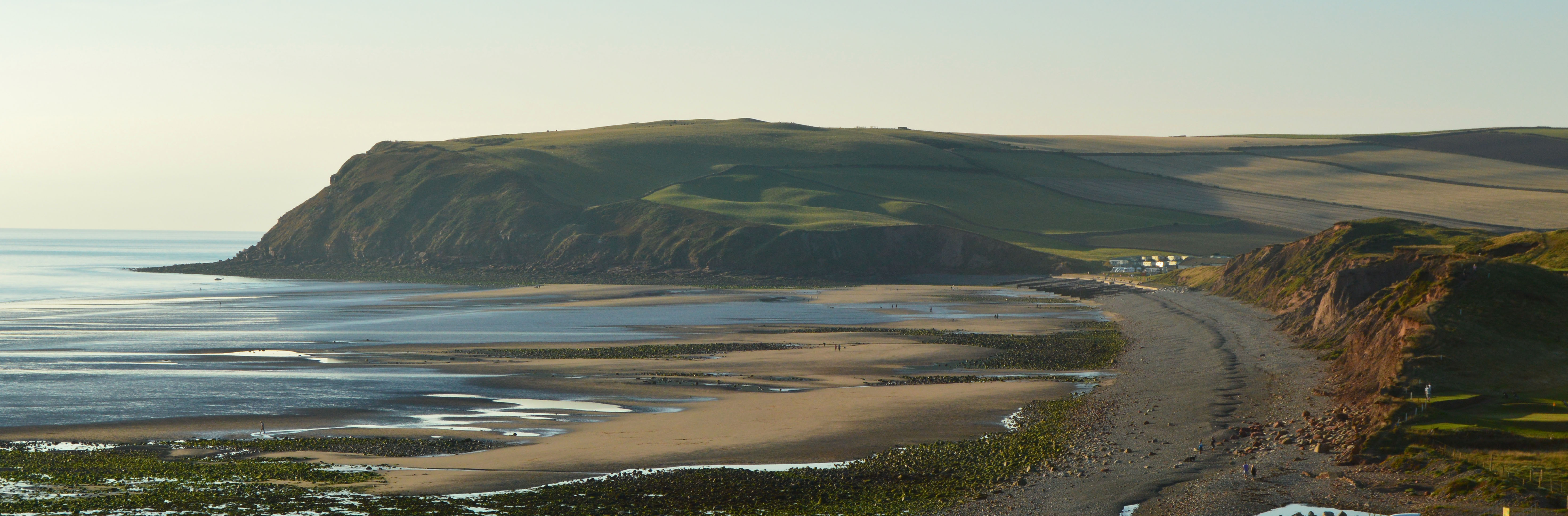
Every year Its Sixth Form ran a Summer Camp for ‘underprivileged children’ from Hulme on St. Bees Head in one of the fields to the west of Cottam’s Corner.

St. Bees Head. Campsite is just out of view on the right about a third the way down the photo.

St. Bees Head. Campsite is just out of view on the right about a third the way down the photo.

It was the brainchild if memory serves correct, of teacher John Warbrick.

At first the kids were very wary of us, but they soon settled give or take the odd bout of homesickness. Once they realised that we weren’t there as Teachers, we soon became friends.

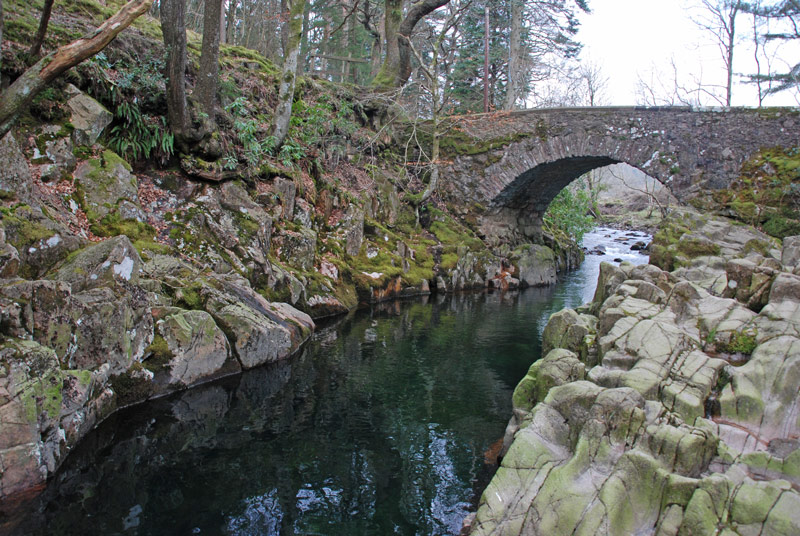
Our duties were to prepare the site: put up the marquee, dig the latrines, and pitch the ‘Icelandics’ (large tents the children would be using.) Then in teams cook, wash up, arrange activities … generally make sure that they had as good a time as possible. I remember we organised football matches, rugby matches, took them for a day on the beach, a morning at the farm, played wide games with them, sang campfire songs, took them up Eskdale on the miniture railway from Ravenglass, which culminated in a jump by the bravest/stupidest from Trough House Bridge into the icy waters of The River Esk.

Trough House Bridge. How I avoided a heart attack I'll never know

Trough House Bridge. How I avoided a heart attack I’ll never know

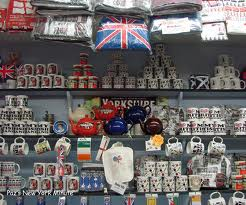
But perhaps the memory that sticks with me most is the day out in Keswick. A coach was arranged to pick us up and take us over there. Well, it would be fair to say that the good shop keepers of Keswick weren’t best prepared for our party, which numbered some – quick fingered characters (‘They call me the ‘Thief of Hulme’) said one, proudly. With their wares freely displayed in small, crowded shops it was an Aladdin’s Cave for our charges and in scenes reminiscent of Russell’s play the kids collected pocketfuls of sweets, souvenirs for home and touchingly, presents for us. Although what you were supposed to do with an ‘I Love Keswick’ gonk troubled me for some time.

keswick

You see what I mean.

You see what I mean.

I recall the grand turn out of pockets on the coach back to the campsite, and was astonished at what some of them had managed to get away with. Needless to say they were the hauled over the coals for it, (if a little unconvincingly) by their teachers; The general consensus of opinion being was that the tradespeople of Keswick had presented just too much temptation (and inflated prices)for our young Mancs.

At the end of the week, there were tearful farewells as some of the children pleaded to stay. And then they were gone. And we were left to contemplate in our total exhaustion the magical week we had just passed.

There were promises to keep in touch, which, apart from a visit I made the following year to St. Georges, came to nought. Not surprisingly.

So why the long-winded epic?

Well it’s just that the camp and indeed the play before it proved to be two cracks in my cast iron resolve never to be a teacher or to work with young people. Within 6 years I was well into the ‘Chalk and Talk ‘routine and (almost) loving every bit of it.

As Mrs Kay Says: ‘You can’t go all the way to the seaside and not go down to the beach’

The beach?

The beach?

Some of the team. John Warbrick back row third from right

Some of the team. John Warbrick back row third from right.


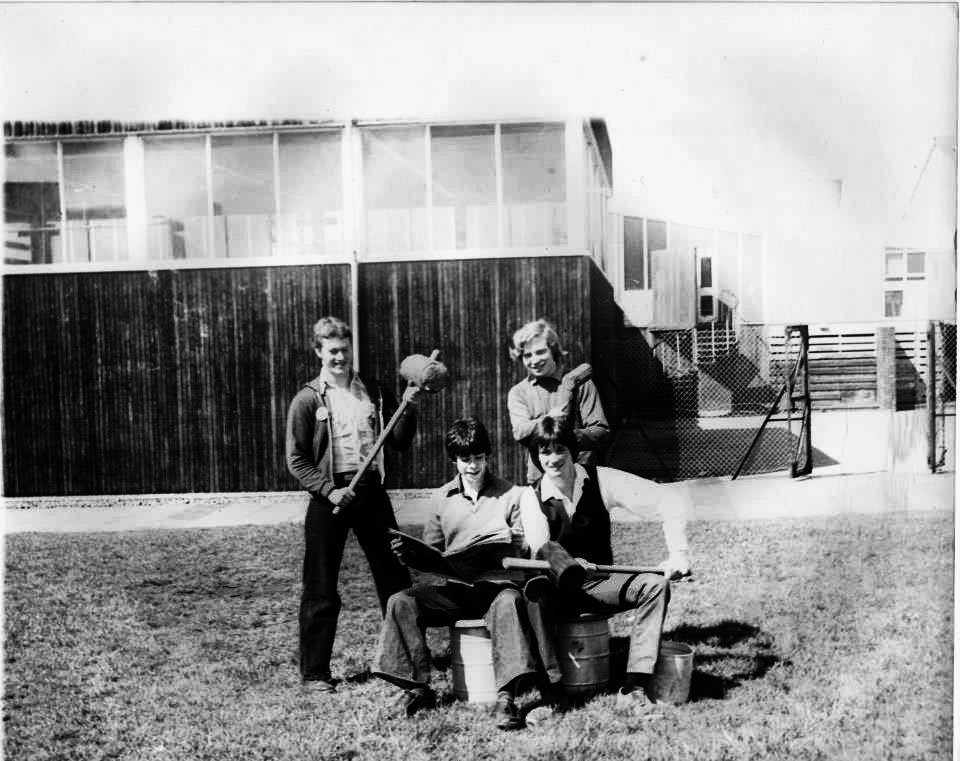
Duane Evans-Parker, Pete Smith, The late Jonathan Wolstenholme, Miles Barton...Write your own caption...

Duane Evans-Parker, Pete Smith, The late Jonathan Wolstenholme, Miles Barton…Write your own caption…

Those kids will be forty five or so now. I wonder if they ever remember?

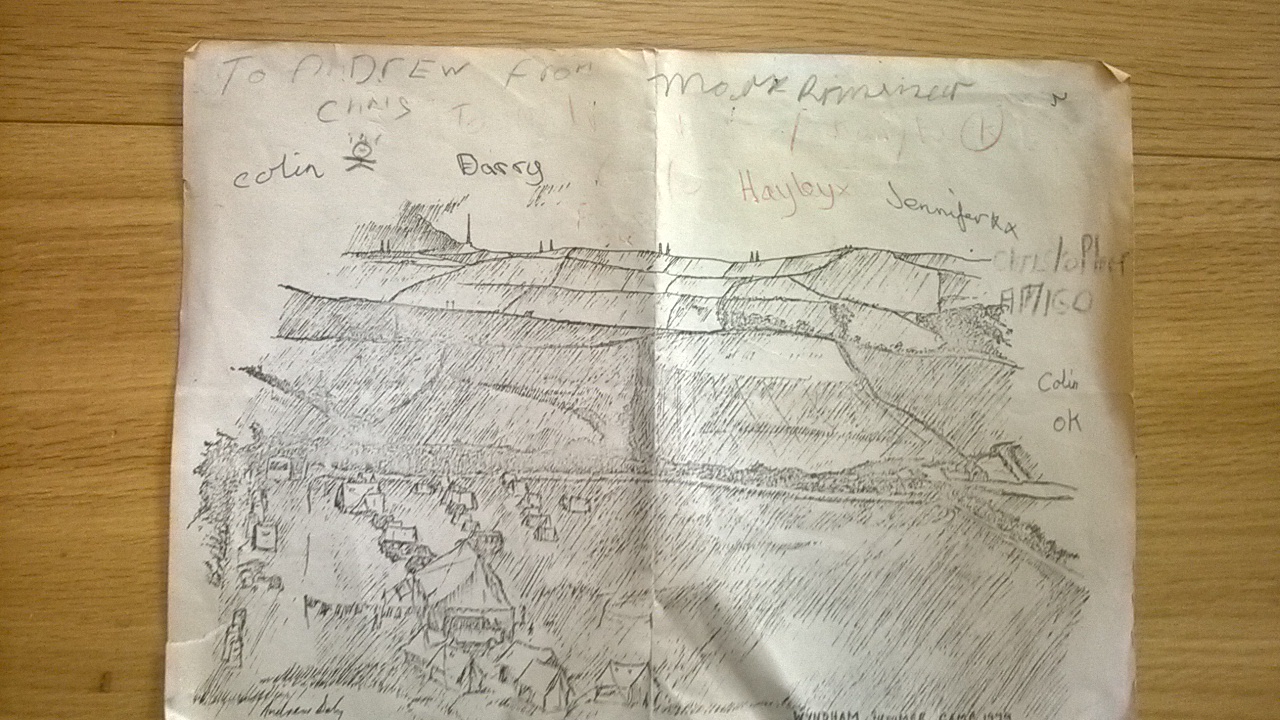
Drawing of the campsite

Drawing of the campsite

© Andy Daly 2014

Getting A Kick Out Of Picasso

It was Picasso who famously said:

“I yam what I yam”… No, hang on … I think that might have been Popeye. Sorry.

It was Picasso who famously said:

“Beauty should be convulsive or cease to be”

Well, in this true story one of Picasso’s most famous works gets so convulsed it very nearly ceased to be, after a visit to view it by Yours Truly and a group of thirteen year old school children.

Warning: Art-lovers who are of a nervous disposition and anyone who works in the Tate Gallery conservation department or is among its curatorial staff should definately avoid this story.

Tate Gallery, ‘The Three Dancers’ by Picasso 1925.
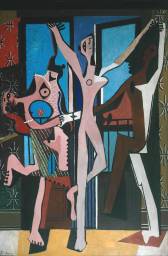
3dancers-thumb

I’ve always really liked ‘The Three Dancers’. I think it’s the blue. I love that saturated Mediterranean cobalt /cerulean blue that provides the backdrop to the jumbled array of semi human shapes in front of it. I’d always found that it had a ‘contemporary yet retro’ feel about it, which satisfied my teenage post-Punk Jazzy leanings. Plus it had a dark, layered story behind it which I found fascinating. ‘The Three Dancers’ used to hang in the largely static Millbank Tate display, now the home of Tate Britain; and along with Matisse’s ‘Snail’ was one of the favourites that I used to go and say ‘Hello’ to each time I visited.

Of couse, the reason ‘The Three Dancers’ and ‘The Snail’ had this feel about them was that these were works by artists who were hugely influential on the development of the visual language used in commercial art, during the 1950s and 60s. Something, if not knowingly, I was steeped in.

The Tate Gallery Early 1980’s

As you may already be aware the Tate’s collection comprises the National Collection of British art from 1500 and International Modern and Contemporary art from 1900. Not exactly happy bedfellows, I think you’ll agree. Hence, the Tate Modern development which effectively took all the modern/contemporary work to the Bankside galleries and left the ‘boring stuff’ at what has become Tate Britain.

In the dark old days before Tate Modern, the collection was housed as I said, at the Millbank site. It had been built on part of the old prison (You can still see how local streets to the north follow its groundplan) and was paid for by the great sugar baron Sir Henry Tate. Just think: the existence of one of the most comprehensive collections of art in the country is in a roundabout way responsible for countless thousands, possibly millions of dental caries and cases of tooth decay.

By the early 1980’s, it was, if you’ll forgive me, a rather staid collection which had considerably outgrown its accomodation. Despite this, the displays changed rarely, although there was a notional annual re-hang.
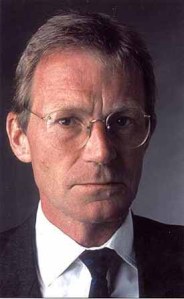
Saint Sir Nick Serota

Then along came Contemporary Art’s ’Knight in Shining Armour’ (Saint) Nicholas Serota. Things soon started to change. He started by using the Duveen Galleries to rotate pieces from the collection, the displays became more varied. Although I was in support of Serota’s developments, on more than one ocassion, I found myself ‘caught out’, and plans to take a school group visit, had to be hastily adapted or re-arranged as the works I had intended we look at were not in fact on display. And so, it was that one day I found myself on the phone to the Tate Education Department to ask whether a visit could be arranged to see ‘The Three Dancers.’

Why?

Because? Well, because at some point early on in my Art teaching career, I had the bright idea of making a full sized version of ‘The Three Dancers’ with a group of kids.

I had been doing a painting project with a group of Year 8 students and noticed how difficult they found it to think of and use paint in any way other than thick blocked flat areas of colour. They drove me mad as they would attempt to paint and re-paint their work with standard school powder paint to achieve, regardless of what their subject actually looked like, a uniform, even surface – an impossibility.

Mind you, give the majority of the population of the UK a paintbrush, colours and paper and yell ‘PAINT!’ and they would do exactly the same. It was the first time it dawned on me that as a trained artist (I hesitate to say ‘well-trained’ as that is a whole new can of worms I’m keeping in the fridge for another time) I stood in front of the students with the experience of years of visual imagery, the vocabulary and command of language, plus all the other baggage that goes with being an ‘Art Teacher’, whereas the owners of the eager faces in front of me were light years away from the frames of reference which would allow them to access the conceptual and contextual place I inhabited. Phew! (I hope you notice I resisted the overwhelming temptation to use the words ‘mindset’ and ‘paradigm’ here: A major achievement I feel)

I began to think of how I might get round this and help them –

  • Understand more about the qualities of paint – what you can do with it.
  • Understand how to achieve these qualities themselves in a controlled way through
  1. colour mixing and all that it entails: mood, emotion, symbolism etc.
  2. Application of paint: brushwork, other methods of application.
  3. Formal qualities like texture, surface, tonal variations.
  4. Methods like impasto, washes etc. Techniques versus Experimentation
  • And to understand why artists do the things they do: the all –important context ; and to give them a bit of respect for  Artists. To begin to arm them with some of the basic tools – which would allow them to decipher or read artworks – even if it all it managed to achieve was a little insight, it was better than nothing.

So, after much deliberation (Probably the last hour in the Priory Tavern on a quiet week night) I hatched a plan which was to get them into handling paint more freely. By subterfuge. Trick them into it!

All I had to do was find an abstract/ish painting (one which would not allow them to get hung up on achieving a ‘likeness’ to anything they might see, or think they might see in it.) Preferably a painting with a story, which when it was finished, could be revealed and de-bunk the notion that ‘Modern Art doesn’t mean anything’. It also needed to fit the bill in terms of its freedom and handling of paint.
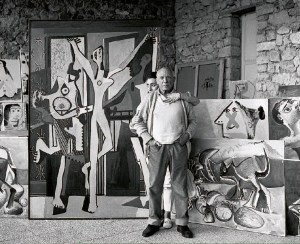
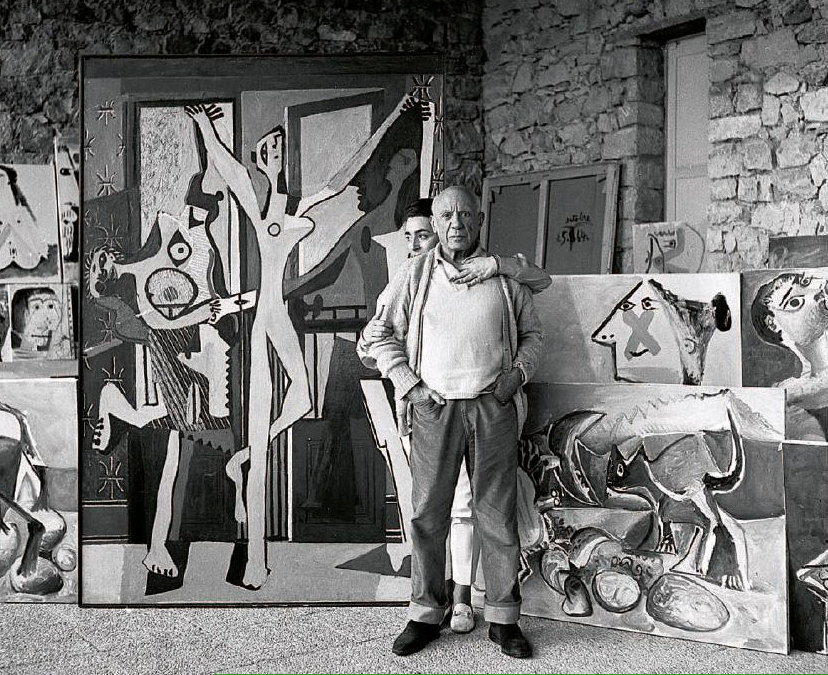
Picasso and ‘The Three Dancers’ 1965 The year the Tate bought it.

(Pic. Lee Miller)

As I thought about it a bit more (Wednesday and Thursday night in the Priory Tavern) I realised that a Picasso Cubist painting or at least a ‘fractured plane’ painting would be ideal because it would allow me to ‘cut up’ the image and distribute it among the class more easily. If I worked out the proportions correctly, each member of the class would have an identically sized piece, which when painted could be assembled the same size as the original. Because of the nature of the original, it wouldn’t matter if the students’ work wasn’t exactly a perfect fit – so they didn’t need to get hung up about that either. I would tell them nothing about their ‘slice’ of the painting. In fact only when all the pieces were complete and the finished painting displayed in school – would they see it for the first time, and then the story behind it revealed. Now then … which painting would fit the bill? What about ‘The Three Dancers’?

And so it was.

You know what? It worked like a dream. We were mixing paint with glue, sand and sawdust to achieve textures, some of the kids went to great lengths to replicate the cracks in the original paint surface – by making actual cracks in their work. It was great fun and the finished group piece went up on display.

A phone call to the Tate Education Department.

‘I’m afraid it’s not on display’

This is not what I wanted to hear. The students had made such a fine job of the ‘patchwork painting’ and were so interested in its story, that I’d (rather hastily) promised to take them to see the real thing.

‘Is it possible to see it in the vaults, or wherever it’s kept when not on display?’

‘You mean The Stores? We only allow that usually under special circumstances’

‘Pleeeeeeeeeeeease’

‘Okay, I’ll see what I can do. Call back in about half an hour’ …..

Which I did:

‘….. I’ve spoken with the Heads of the Education and Curatorial Departments and they have agreed on this one occasion only to allow you access to the stores with your group. Please report to the School’s Reception on arrival.’

Result! We’d done it.

Our Day Out

I hired a small bus and on the appointed day off we went, worksheets fluttering out of the back window, to the Tate and our (by now) beloved ‘Three Dancers’.

Well, it was something else. After leaving our coats and bags  in the education area, we were guided – somewhere, unfortunately my memory is hazy about how we got to the Stores, or indeed, beneath the galleries thronging with people above, they were. Before we knew it we were in what resembled a concrete underground car park. The door to the stores, a HUGE door, at least a metre and a half thick was already open in anticipation of our arrival. I pretended to be quite blasé about the whole thing but in fact I was completely overawed by what I was seeing. Over to the left of us was someone I presumed to be our education department guide, waiting for us. The dungarees were a bit of a give away. Behind him, along the length of this cavernous space there were what appeared to be a long series of enormous box files, all slotted together, appropriately labelled on their spines.
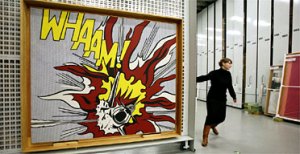
Tate storage.

As we approached, one of the stores staff selected one of these spines, and using a handle about three quarters of the way down, drew out a huge metal grille display panel on wheels. On it was a Georgio de Chirico, a couple of Salvador Dali’s and our ‘Three Dancers’.

‘You okay then?’ Asked the storeman ‘Yes, we’ll be fine, won’t we?’ said our education guide with a cheery smile.

‘Thanks Stan.’

‘ Ten minutes?’

‘Yes Stan, we’ll be done in ten minutes’. Our education guide, introduced himself as Simon.

A sea of hands shot up, all the children shouting at once.

‘Sir! I can’t find my piece!’

Now you never know who you are going to get from the education departments on these sorts of jaunts. I needn’t have worried. Simon announced:

‘Ah! … Any more of that horrible noise and this (he motioned over his shoulder at the painting) goes straight back in. Do you realise how lucky you are to be in here? I’ve worked here for years and this is only the second time I’ve been down here’

My throat had begun to get very dry. ‘Bloody hell, how did I manage to blag this?’ I thought to myself.

Quiet again. Simon began by asking the kids about their paintings in school. To what extent their own individual pieces and then the group piece matched the original. He then studied the original with them, and got the students to look specifically for things they had not spotted in their reproductions and paintings. He then drew their attention to the contorted female face on the left. Why?

The students responded

‘She could have been dead.’
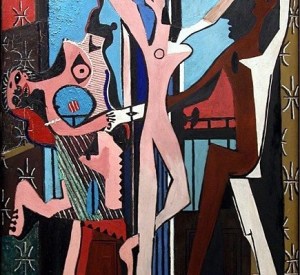
Three Dancers (detail) showing thickness of paint surface left hand side

Three Dancers (detail) showing thickness of paint surface left hand side

‘Shot … or’

‘Diseased’

‘What kind of disease?’

‘Aids? … Yeah maybe he wished she had Aids’

‘But what kind of person would wish that on someone?’

‘Someone that hated them’

The Story

And so the story began to unfold …

Just over seven feet high, Picasso painted ‘The Three Dancers’ in spring 1925 in Paris. X-ray images show a much more conventional painting of three more rounded realistic figures beneath. Something had happened to cause Picasso to make a new start and take a more drastic direction. The backdrop to this was his rapidly disintegrating relationship with his wife Olga Kokhlova, a Russian ballet dancer with Diaghilev’s Ballets Russes. The ‘something’ was a death. That of one of Picasso’s oldest friends from his youth in Barcelona, Ramon Pichot. In fact Picasso once said ‘While I was painting this picture an old freind of mine, Ramon Pichot died. I have always felt that it should be called ‘Death of Pichot’ rather than ‘Three Dancers’’

Pichot (or his ghost) appears in the painting as the ghostly black sillhouette on the right. He is significant, because to Picasso, Pichot had been a link back to his formative years in the Catalunyan capital. He was one of a group of regulars at a bar known as Els Quatre Gats, (‘The Four Cats’ which you can still eat and drink at today) When it opened in 1897 it became the centre of the cultural movement known as Modernismo. Another regular was Carles Casagemas. Casagemas and Picasso, who were almost the same age became very close friends. Indeed, at the turn of the century they were sharing a studio for which Casagemas apparently paid.

At the time of his death, Pichot was married – Now this is where it gets interesting or messy depending on your point of view – to none other than Germaine Gargallo: love interest and ultimately subject of obsession, twenty five years earlier of Picasso’s best but increasingly unstable friend, Casagemas. In 1901, while Picasso was in Madrid and his friend in Paris, Germaine finally spurned Casegemas’ advances. He, in response, invites friends, including Germaine for a meal on the Boulevard De Clichy, at the end of which, he stands, produces a pistol which he aims at Germaine and fires. She avoids the bullet and has the sense to stay down and feign injury, whereupon Casagemas turns the pistol to his own right temple. This time he doesn’t miss. His autopsy reveals he was impotent.

Picasso later says that it is Casagemas’suicide that prompts his ‘Blue Period’ and indeed, Casagemas appears in a number of paintings from this era, for example, ‘La Vie’.

‘Alright, let’s get back to the painting and the figures it shows and see if we can tell who they are’

‘ The left has got to be Germaine, Sir’

‘Good. what about the others?

In what strikes me as an innovative move, Simon has invited some of the kids out in front of the painting to get into the positions held by the protagonists and ‘act out the picture’ Top Banana: some Kinaesthetic Learning. Excellent! We have Pichot with his big nose who seems to be part of the futuristic, stylised brown and white figure. To the left, the grinning, grimacing, diseased, gun-shot head of Germaine.

‘Now try to get into that same arched position. How is it?’

‘Painful’

‘Now who’s going to be the middle figure of Olga, Picasso’s wife the ballet dancer?’

Simon picks one of the lads.

‘Come up’ encourages Simon. Our volunteer obliges, and goes on to attempt the stance.

‘Good!’ He has just about been able to clasp hands with his two colleagues.

‘That’s it. Now you’ve got to get your left leg back here … kick it back, that’s it kick it right back!….

I had seen too late what was coming. A perfectly executed back kick, with the knee tucked under the mid section, shoulders square looking away from his opponent (painting) delivering full power through the heel of his flexed foot. Good rotation, balance, strength. Ten out of ten. Jackie Chan would have been proud.

Boom!

The hollow noise as foot contacted with painting reverberated around the stores. As it did, the frame of the painting and the piece of perspex protecting it (thank God it wasn’t glazed!) flexed crazily, like some insane wobble board. I remember the reflected light flashing up and down the painting until it finally settled which took an appallingly long time for it to do.

Simon flashed me a glance which said ‘What the fuck are we going to do?’

I flashed him a glance which said ‘We? What do you mean We? What the fuck are YOU going to do?’

Simon’s face went from white, to grey to a sickly green, like a ghastly traffic light.

Now it may interest you to know that ‘the Three Dancers’ is one of the Tate’s most fragile and friable pieces of work. You may not have noticed, but it never goes out on loan. Nor will it. ‘The Three Dancers’ is an Art conservationist’s nightmare. In fact, the gallery and its powerful conservation staff actively limit its exposure to light to slow down future changes and to preserve this already unstable work for future generations. Picasso, the little rascal enjoyed using commercial oil-based paints which would have had quite different properties to artists’ oil paint. They would have been machine rather than hand ground for a start and not designed for permanence of colour. If you can, take a close look at ‘The Three Dancers’ next time you see it. There some decidedly ropey looking bits and some large cracks. When asked in 1965 about cracks already apparent in the paint surface, Picasso said ‘some people might want to touch them out but I think they add to the painting. On the face you see how they reveal the eye that was originally painted under­neath’ He seemed to relish the notion that the viewer now had a glimpse into how he created his work. But I wonder how he would have reacted to it being used for Taekwondo sparring practice?

‘Thank Christ!’ Simon croaked, when it became clear that for some inexplicable reason, the surface of the picture (which is what I had feared for) was alright. I had a mind’s eye image of a perfectly preserved frame and perspex panel featuring at its bottom, a dusty pile of rubble.

‘WellgreatSimonI’msureweallenjoyedthatdidn’twe?Nowit’sprobablytimeforustomakeamove’ I spluttered.

A voice: ‘Okay then?’

I froze: Stan! The storeman was making his way back to us.

‘Everything Okay? I mean you’ve not damaged it have you?’ Laughed Stan.

‘You’ve got no idea ….’ I thought.

Simon went through his traffic-light sequence once again, and we made to leave. Stan none the wiser.

We went back up to Level One, where I thanked Simon for his valuable input, and  without another word about what had just happened, he departed.

It was time to get out of there PDQ, so I assembled the kids and made for the bus and home ….

I must say, afterwards I spent a nervous couple weeks, half expecting a letter to delivered to me at school from the Tate’s lawyers, Withers, Linklaters, Brachers demanding to know whether any of our students had touched the picture and if so, requesting an initial payment of $100,000 to cover the cost of repairs.

I am sure Picasso would have been amused. I can hear him laughing: ‘Ug ug ug ug ug!’


© Andy Daly 2014
Botox Gives Me The Needle

Continue reading

Coat tales. Art in Newcastle

Author’s Note: Caution – Some aspects of this post may not be suitable for younger children or those of a nervous disposition. It details actions of my former self which are neither big nor clever.

Long ago, back in the day when Dizzee Rascal was just a Rascal, I was an Art student in Newcastle Upon Tyne. Now I don’t know whether you’ve ever been to Newcastle in the winter, but it is, to use the correct meteorological term, bloody freezing. Therefore, it is essential to be in possession of a good coat to keep the bitter cold at bay. Unless of course you come from Newcastle; in which case it is essential to be in possession of a good vest or cap-sleeved T Shirt. For if you weren’t aware, Geordies are innoculated against feeling the cold at birth and that is why flimsy garments, summer dresses and bare feet are common sights on the town (or ‘Toon’ as it is more correctly known) in mid-winter.

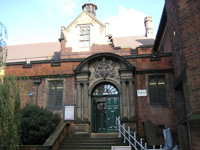
I studied Fine Art at the University. The department, originally the King Edward VII School of Fine Art was housed in a building to the south east of the university quadrangle, once of the former Kings College, University of Durham. I say ‘housed’, in fact it was partly housed; namely The draughty Library, frosty gallery, chilly workshops and studios, in this imposing 1913 structure with its bronze statue of King Edward VII installed in the niche above the King’s Road entrance, wrought iron gates and tower with a double-arched gateway. The rest (cold offices and even nippier workshops and studios) were to be found in an icy Modernist white cube, tacked on to the original building.

Quadrangle

Fine Art Department (Modernist White Cube out of sight behind)

In the first year, we were ‘taught ‘(and I use the term loosely here) together in a large warehouse of a studio in the new block. We were a strange bunch: a disparate crew of potential artists-in-the-making, all at different stages in our understanding of Art, what it was, what it might be, and how we fit in to the ‘big picture’ (No pun intended) All issues I have to say, the Fine Art course of the time singularly failed to confront.

As a group, we didn’t gel. I used to look at other year groups and compare: they would meet up at breaktime, sit and have a coffee, chat, socialise – bask in the glow; the result of the heady mixture of wonderment, envy and hate with which other students saw us. We seemed to take it all too seriously, hid away and were ‘tortured’. I gave up with them about half way through the first term. The lasting friendships I made from that time were with people studying ‘sensible’ subjects like Law, History and English.

Until, that was, I discovered – almost too late in the day – ‘The Poly’ (Remember them? AKA Newcastle Polytechnic, now the University of Northumbria) Here, with partner in crime and Blood Brother, Skull Murphy I found that there was indeed life during, as well as after Fine Art. But that’s another story.

The tale I am about to recount is of a spell in my first year 1979-80. It was late November and it was cold. I used to wear a ‘Donkey Jacket’. For those of you who have never come across one, they were workmens’ jackets which became popular in the nineteenth century. Unlined and typically of black or dark blue wool, the ‘Donkey Jacket’ usually had two spacious hip pockets, occasionally an inside ‘poacher’s pocket’ (whatever that was) and a reinforcement panel across the shoulders. This panel may be plain black, grey or in recent years, fluorescent orange or yellow (sometimes with the company name stencilled across) in an effort to increase visibility. I never quite managed the dizzy heights of a fluorescent panel, mine was just plain black. As to the significance of the name? I think it is probably a reference to the wearer – the type of worker and the kind of job expected of him: in other words The ‘Donkey Work’.

Guess What?

Anyway, back to the tale. It was bloody cold, and the point was that – as you will know if you were paying attention – the Donkey Jacket: trusty, fine exemplar of British Working Class attire though it may have been, was an ‘unlined ‘garment. So, even when buttoned up, my Donkey Jacket let howling gales of icy cold Easterly wind which swept directly off the Siberian steppes straight through my coat into direct contact with my navel and midriff. I took to wearing it with a jacket underneath, but I was still cold.

Then one evening, I was in our studio, with one of my fellow artists, Anne, having a wander around the cavernous hole, looking at everyone’s work: sketchbooks, drawings, colour studies, paintings, as well as notes on paper, models and maquettes. It lay where they had left it at day’s end (with either a four-minute warning or a call to the pub by the looks of it) on desks, the floor and/or pinned to the wall or screens in their respective studio spaces.

If I can be serious for a minute, there really is something magical about looking at artists’ and designers’ workplaces. To be able to browse through the visual distillations of their thoughts and ideas as expressed in tentative first marks/sketches: wobbly-legged initial attempts at solving the visual problems they have been posed. Sketches, notes, books and art artefacts, some finished others not; complemented with doodles, reminders, visual references – a bus ticket, a bottle top, a scrap of a hotel menu and contextual relationships with a particular artist or artists’ work. Genuine treasure troves – and always so different to each other: from the obsessively tidy, to the manically unkempt, they are a reflection of their owners’ approach to the creative process. Looking at the visual traces of the development of an artist or designer’s ideas – no matter how insignificant they may be, is something I regard as a privilege:

And how generous and trusting: to leave one’s inner thoughts for all and sundry to see. I bet there weren’t many other departments in the university on that November evening which you could step into off the street and immediately get such an intimate snapshot of how a particular student or group of students were responding to a task set.

I think that now, but of course I didn’t think that then. Then it was more a case of ‘Howay, let’s get to the pub, I’m freezin’ Likewise, not everyone’s workspace was blessed with the kind of visual treats I have waxed lyrical about above. Take mine, for instance. As I recall, it had very little of anything to show. I don’t actually remember the project title, but it would have been something like ‘Object and Environment’ and was clearly an attempt to elicit responses from us to the likes of Marcel Duchamp’s ‘Ready Mades’ which aside from using materials in an innovative way – in a sense to represent themselves, had started to (and still do) ask all sorts of awkward questions of the received aesthetic script that was Modernism.

Now, in 1979, although familiar with Marcel Duchamp’s work (I had even seen some of it) had I been asked as my ‘Starter for ten’ to explain the above, I would have been found sadly lacking. In the event, I wound up by making a surprisingly elegant sculpture out of broken chairs from the refectory which took me all of 5 minutes to plan and execute and was as Modernist as you can get.

‘Fountain’ Marcel Duchamp 1917

I didn’t have a bloody clue.

The walk round the studio was punctuated by having to negotiate several large piles of rubbish, for the initial stages of the project seemed to induce in some people, (Yours Truly included) a kind of ’Skip Fever’ in which the contents of, apparently, every skip within a two-mile radius were brought back to the studio as potential source material. I had recreated part of a skip I had found behind the Playhouse.

Rubbish

‘Why?’ I can hear you ask: Why indeed. Anne called me over to look at Caligula’s work. That wasn’t his real name. In fact, I don’t recall why she called him that, unless it was because he looked like John Hurt, the actor who played the character in the ‘70s BBC dramatisation of Graves’ book ‘I Claudius’. Whatever, the case – if only for a brief period, the name stuck. Caligula it was.

‘Bloody Hell’ She says ‘Would you look at that’. She was pointing in the direction of Caligula’s workspace. ‘What a bloody mess. I don’t know how he works here!’ It was a tip. Literally. For it seems as though Caligula, cold sweat, heart racing, stricken, like me with ‘Skip Fever’ had done the same thing, but on a massive scale. Either that or together, the students in his area of the studio were doing some serious collecting, dumping their stuff near his table. The pile was now threatening to engulf his desk. Despite all this, Caligula appeared to be, if memory serves correct – and I think it does, making a small painting of an apple, the subject of which was hanging on a string suspended from the ceiling.

‘What do you think of the painting?’ Anne asked me.

Hmmm?… What?’ Something had caught my eye. In amongst all the clutter and debris was the obligatory shopping trolley. Hanging out over the back of the trolley was what looked like a donkey jacket. I had a closer peek. Well, it was slightly more than an ordinary donkey jacket. It was a much heavier fabric, slightly longer … and it was lined! The lining was torn on one side, admittedly, but there was definitely a lining. Before I knew it, I was trying it on. A perfect fit! (Not often words found in the same sentence when it applies to Yours Truly and clothes) … but more to the point it was warm!

Art – or is it the other way round? See how difficult it is?

‘What do you reckon?’ Do you think it looks like rubbish? I asked Anne. ‘Aye, it looks like bloody rubbish from where I’m standing’

‘No, what I mean is do you: 1) think it’s someone’s real jacket and that has been inadvertently left here? Do you: 2) think its ‘Art Rubbish’ that is part of a combination of real objects, intended to elicit responses about ‘What makes art Art and what makes rubbish Rubbish? Or do you: 3) think its real rubb……..’

‘I know what you mean, idiot. I think its real rubbish. Anyway, man, who’s going to care about a scavvy bit of material like that?’

True: and so, without another moment’s thought, I put it on, and immediately felt warm as toast. Done deal! And off we went.

Now it came to pass that some months later, around March the following year I guess, that I was in the University Student Union one night. We didn’t go there often, preferring to drink, go to nightclubs or see bands at other venues in the town such as The Strawberry, The Spital, Crown Posada, The Forth, The Bridge, Balmbras, The Bacchus,The Belle Grove, The Royal Bar, The Newcastle Arms, The Prince of Wales, The Leazes, Trent House, Red House, The Lonsdale, The Baltic, The Mill, The Percy and The Hotspur (but only if desperate) The Stage Door, Tiffany’s,The Poly, The Cooperage,The Buffs Club, The Bier Keller, The Mayfair etc. Not that we went out much…

However, on Friday nights, The Union did used to do a fairly decent disco. Anyway, whatever the reason, band or disco, I was in The Union and at one point, towards the end of the evening found myself in the Gents toilets – I have to admit, dear Reader, rather the worse for wear. Mind you, I was still a long way off the loss of control of bodily functions stage, and hadn’t yet started with the ’Bedroom Whirlies’, I could have got home unaided without stops to sleep in skips, bus shelters etc, but I would have had trouble ordering in the Stanhope St. Chippy or refusing another drink. I stood at the urinals, pondering the above, casually wondering where the evening would take me, when I became suddenly aware that I was not alone. At the other end of the urinal was a crooked, decidedly unkempt figure. He definitely had the ‘Whirlies’, for with cigarette hanging from the corner of his mouth, he reeled backwards and forwards trying to maintain his balance as he relieved himself.

Recognition. It dawned on me who it was: Caligula! Oh shit! And guess what I was wearing?

Probably conscious of my gaze, Caligula slowly turned and looked. He reeled backwards as he did so and in adjusting his position found he had turned his head too far. He made to bring it back. This time, he tipped forwards, regaining his balance just in time to prevent falling (still relieving himself, cigarette still hanging from the corner of his mouth):

‘Aaallrrrougtthhh?’ He said Trans: ‘Alright?’

I replied: ‘Alright?’ Which I felt to be the closest approximation. I still had no idea whether he even recognised me. Any further doubts on this score were firmly put to rest when he let go of himself with one hand and (thankfully, for I feared for the jacket he was wearing as the glowing cigarette tip was getting longer and more and more fragile) took a long pull on the ciggy, caught hold of himself again and looked at me once more. His eyes had narrowed to the tiniest slits, bothered as they were by the wisps of smoke as they sidled up the side of his face. His body swayed backwards and forwards as, unable to get a response from his eyes, he tried to focus on me ‘the long way round’

‘Ey! Thath’s my futthen coa…’ Trans: ‘Hey that’s my fucking coa…’

Without thinking I blurted out:

‘Yeah, and you know what? It’s a disgrace the lining’s all ripped on one side. I don’t know how much longer I’m going to be expected to wear it in this condition’

Still rocking and rolling:

‘S’my futhecoaaa..ey! Fyoouwannit yu cannavit. Y’heear me? Fyoouwannit yu cannavit. Annever licchtet anywaaaah, phut!’

Trans: ‘Its my fucking coat. If you want it you can have it. Do you hear me? If you want it you can have it. I never liked it anyway, phut!

And with that, he spat into the trough and I made my exit.

Which is where the story should have ended, except for the fact that the remainder of my relationship with the coat was to be short-lived; as in a wholly appropriate turn of events, someone nicked the coat from me a few weeks later at a party in Benwell.

And what of the coat’s original, and as it happens, rightful owner? Well, if you were to ‘Google’ The Fine Art Department, part of the School of Arts and Cultures, University of Newcastle Upon Tyne; there you would find details about its staff, and in particular, its current Professor, a renowned sculptor, whose work is a ‘response to the materiality of landscape.’

What it doesn’t say much about is that some years ago, he, himself was a student at the University’s Fine Art Department.

In fact, he was in my year.

Now, I’m saying nothing else on the subject, except to point out that a difference of opinion over the semantics of Rubbish meant that during the winter of 1979-80, I was a few degrees warmer than him.

© Andy Daly 2010

REMEMBERING LUCY

Let me tell you about Lucy. Continue reading

Frankenstein’s Monster

It’s a good thing we can’t see into the future.
If I’d have known that one day I would be totally reliant on two Titanium rods implanted into the deepest, darkest recesses of my brain, that these would be wired up beneath my scalp, down my neck connecting to a battery/pulse generator implanted in my chest , I would have been horrified.
It always freaked me out as a kid. You know, that part man, part machine thing. I blame Dr Who; which I watched from William Hartnell to John Pertwee. It was that bloody Davros character half man half dalek that did it. Yep, the thought of it would have kept me wake at nights for years.
But we adapt, and now it seems the most natural thing in the world.
And so today. Lovely and sunny, I decide to go for my usual walk around the park and nature reserve at the end of our street – without my stick.
Ever had a bad idea?
I should explain. I don’t use my stick to rest on or take my weight at any point. I use it to create ‘cues’ (A bit of Conductive Education here) I tend to swing it in front of me, presenting a target for my left and right foot in turn to kick. In this way, I am able to create a rhythmic movement of my legs which approximates steps and allows me to perambulate, albeit with a clumsy gait, even when the oral drugs I take have ceased to be effective and I am in what we in the business call an ‘Off’ state.
I am doing quite well until on the way back I go ‘off’. One of the particlar ideosyncrasies of the way Deep Brain Stimulation works for me is that when the oral medication is working, my gait is adversely affected by an increase in stimulation; so I have to wait for a ‘sweet spot’ in my two hourly medication cycle such that the tailing off of the L Dopa allows me to increase stimulation and as a result, it enables me to walk. As I have said though, it ain’t pretty. I’ll try and describe how it feels as I go ‘Off’. I begin to feel like all my strength and energy are being sapped, meanwhile the muscles of my neck lock up, my jaw becomes set and my head feels like it weighs a ton. Arms and legs stop responding to all but the ‘biggest’ movements, fine motor control is shot. I start to overheat as my body loses its ability to regulate its temperature. Any aches and pains I have got are magnified x 2
The absence of stick proves more problematic than I had anticipated, I start to stumble and my footsteps start to run away with me (Festinating Gait it’s called – lovely phrase isn’t it?) I have to think of a suitable ‘cue’ to control this. I finish up by marching, calling ‘left right’ in my head and swinging the opposite arm, the ‘cue’ being the lower arm seen from the corner of each eye in turn.

Handsome eh?

Handsome eh?

It is when turning a corner I discover that my head follows my body without moving, rather than looking into the corner as you would normally. Marching, arms straight, with my big steel toe-capped boots, frozen Parkinson’s mask- face and surgery scars (which look like OS map symbols for a railway embankment or cutting), I am struck by how much I must resemble Frankenstein.
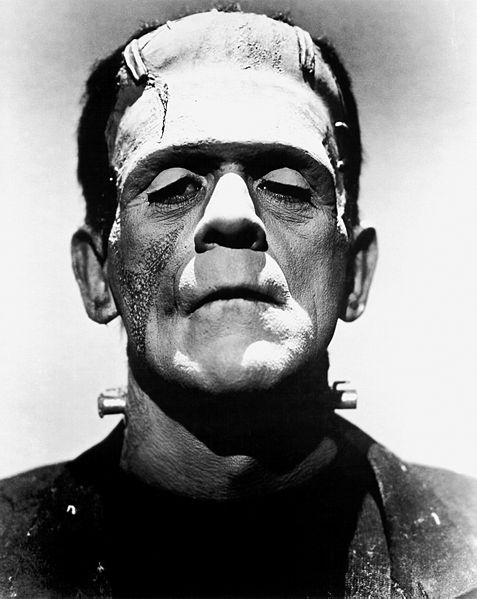
Or rather Frankenstein’s monster as immortalised in Boris Karloff ‘s portrayal in the 1931 movie ‘Frankenstein.’ The creature almost always appears as gruesome figure, with a flat square-shaped head and bolts to serve as electrical connectors or grotesque electrodes on his neck, and thick, heavy boots, causing him to walk with an awkward, stiff-legged gait. It sounds awfully familiar …
Now did you know that to this day, the image of Karloff’s face is owned by his daughter’s company, Karloff Enterprises?
Neither did I.

© Andy Daly 2014